Inquiry
Form loading...

China Top 10 Magnetic Tiles Manufacturers for Global Buyers

Global buyers choosing magnetic construction toys need more than a polished catalogue. They need consistent magnet placement, durable plastic edges, clear age guidance, and responsive factory communication. This guide introduces China’s top 10 magnetic tiles manufacturers and the practical questions buyers should ask before requesting samples or pricing. Small details matter. A tile that clicks firmly in a sample should do the same across repeat orders.

A fictional composite sourcing adviser, Alex Morgan, frames the evaluation this way: “Tiles Magnetic products earn trust through repeatable quality, not attractive photos.” This is an editorially created line, not a sourced quotation. It reflects a useful purchasing principle: compare sample pieces, inspect packaging and documentation, and confirm production capacity, minimum order quantities, and lead times directly with each supplier. Ask how quality checks are recorded. Check the answers.

The companies in a supplier shortlist may differ in specialization, export experience, customization options, and communication style. A ranked list is only a starting point; capabilities and commercial terms can change. One weakness in any manufacturer overview is that public information rarely reveals day-to-day consistency. Buyers should verify claims independently and request current evidence before making a decision. The aim here is not to promise a perfect match, but to help global buyers compare suppliers with clearer criteria and fewer assumptions.

China Top 10 Magnetic Tiles Manufacturers for Global Buyers

Understanding Magnetic Tiles and Their Global Market

Magnetic tiles are flat plastic pieces with embedded magnets along their edges. Children connect them to build towers, windows, and small geometric structures. The open-ended format supports spatial reasoning and collaborative play, though results depend on a child’s age and the design of the pieces. Some sets feel sturdy in a display photo but flex during real play. That detail matters.

The global market serves families, schools, and play-based learning centers. Buyers compare tile size, connection strength, edge finish, set variety, and packaging suited to shipping. Demand can differ by region: classrooms may need larger quantities, while households often prefer compact starter sets. A clear product specification helps buyers assess samples consistently. Ask how magnets are secured and inspect seams, corners, and connection behavior. Marketing descriptions alone are not enough.

Tips: Test sample tiles by building a small wall and handling it repeatedly. Check whether pieces connect smoothly, separate without excessive force, and remain intact after ordinary use. Also review age guidance and care instructions. Small differences can change the play experience.
Key Criteria for Evaluating Chinese Magnetic Tile Manufacturers

When evaluating Chinese magnetic tile manufacturers, start with safety evidence, not catalog size. The U.S. Consumer Product Safety Commission estimated 231,000 toy-related emergency department injuries in 2023. This makes magnet strength, encapsulation, and impact resistance essential checks. Request test reports against ASTM F963, EN 71, and ISO 8124. Verify the laboratory, test date, product code, and sample photographs. A certificate without traceable details is weak evidence.

Production control matters equally. Ask for incoming-material records, magnet pull-force checks, ultrasonic welding controls, and batch-level inspection reports. Visit the factory or arrange an independent audit. Look for clean assembly areas, calibrated gauges, and sealed cartons. The European Commission’s Safety Gate 2023 report placed toys among its most frequently notified product categories, representing about 15% of alerts. That figure deserves attention from every export buyer. Packaging, warnings, age grading, and multilingual instructions should match the destination market. Small gaps can create large costs.

Tips: Order samples from different batches. Test corners, seams, and repeated drops. Ask how failed units are isolated. Confirm whether the same material formula reaches mass production. I have seen attractive samples hide inconsistent magnet placement, so sample approval alone is not enough. A supplier’s response to difficult questions often reveals more than its sales presentation. Price still matters, but unusually low pricing may reflect thinner plastic, weaker controls, or incomplete testing. Recheck those assumptions.

China Top 10 Magnetic Tiles Manufacturers for Global Buyers — Key Criteria for Evaluating Chinese Magnetic Tile Manufacturers

Evaluation framework for comparing suppliers. The weights are illustrative buyer priorities, not audited ratings or a ranking of specific manufacturers.

No. Evaluation Criterion Suggested Weight Evidence to Request Why It Matters
1 Toy Safety Compliance 18% Current test reports for the exact product and intended market; check applicable requirements such as EN 71, ASTM F963, CPSIA, or ISO 8124. Requirements vary by destination and product. Reports should match the materials, design, and age grading of the item being purchased.
2 Magnet Retention and Product Safety 16% Design documentation, magnet-retention test procedures, sample inspection records, and corrective-action records for failures. Loose or accessible magnets can create serious ingestion hazards. Buyers should verify how magnets are enclosed and retained during use and testing.
3 Material and Chemical Controls 12% Material specifications, supplier declarations, and relevant chemical test results for plastics, coatings, printing, and other components. Documented material controls help buyers assess restricted-substance requirements and reduce the risk of unapproved material substitutions.
4 Quality Management and Traceability 12% Quality procedures, incoming and final inspection records, batch or lot coding, complaint logs, and any valid quality-system certificates. Traceable production records support defect investigation, corrective actions, and consistent control between orders.
5 Production Capacity and Process Control 10% Documented production capacity, process flow, equipment list, staffing plan, and evidence that capacity claims relate to the proposed product. Capacity information helps buyers assess whether a supplier can meet forecast volumes without relying on unsupported production claims.
6 Sampling and Customization Capability 8% Pre-production samples, approved artwork and specifications, prototype timelines, and a documented process for approving design changes. Clear sample approval and change control help ensure that mass-produced goods match the agreed design and specifications.
7 Packaging and Labeling Readiness 7% Packaging specifications, age grading, warnings, tracking-label capability where applicable, and market-specific artwork review procedures. Packaging and labeling must be checked against the destination market’s rules and the product’s intended age group.
8 Export and Documentation Capability 6% Sample commercial documents, product specifications, packing information, and experience coordinating shipment requirements for the target destination. Accurate documentation supports smoother order coordination and helps buyers verify product and shipment details before dispatch.
9 Delivery Planning and Communication 6% Written production milestones, order-update process, shipment planning assumptions, and escalation contacts. Transparent planning makes it easier to identify schedule risks early; delivery dates should be confirmed for each order.
10 After-Sales Support and Corrective Action 5% Written defect-claim procedure, response timelines, replacement or remedy terms, and documented corrective-action examples. A defined process helps buyers manage quality issues consistently and track whether corrective actions address their root causes.

Profiles of China’s Top 10 Magnetic Tile Manufacturers

China’s top ten magnetic tile manufacturers are best compared by evidence, not catalog size. The profiles should examine factory audits, mold ownership, export history, and batch-level quality records. Grand View Research projects the global educational toys market to expand strongly through 2030, while Circana reported a decline in worldwide toy sales in 2023. Buyers therefore need durable products, not inflated claims.

One profile represents a high-volume producer with automated injection molding and in-line magnet testing. Another focuses on recycled polymers and lower-waste packaging. Several factories specialize in translucent tiles, producing clean color layering for classroom light tables. Others serve private-label buyers with rapid mold changes, printed instruction sheets, and mixed-carton loading. A smaller workshop may offer careful hand inspection, but its capacity can fluctuate. That matters.

The strongest profiles disclose material certificates, magnet retention results, and corrective-action records. They should reference EN 71, ASTM F963, and ISO 8124 requirements for relevant markets. A practical audit checks tile corners, weld lines, surface scratches, and magnet movement after repeated impact testing. One weak point remains common: suppliers sometimes present laboratory reports without matching batch numbers. Buyers should challenge that gap.

Product samples should also be tested after heat, humidity, and drop exposure. A colorful sample proves little. Procurement teams can rank the ten manufacturers by safety discipline, engineering support, delivery consistency, and transparent communication, rather than by the lowest quoted price.

Comparing Product Ranges, Certifications, and Production Capabilities

When comparing China’s top ten magnetic tile manufacturers, examine product range before judging price. Strong suppliers usually offer basic squares, triangles, windows, wheels, and larger construction sets. Some also provide translucent tiles, pastel colors, or classroom packs. Check magnet strength, edge sealing, tile thickness, and plastic consistency. A sample should survive repeated joining without loose parts or sharp corners. Small details matter. A polished catalog can still hide uneven molding or weak packaging.

Certifications need careful verification, not simple logo checks. Ask for current test reports covering ASTM F963, EN71, CPSIA, or other destination-market requirements. Confirm that reports match the exact product, material, age grade, and factory address. ISO 9001 may indicate organized quality management, but it does not prove toy safety by itself. Production capability also deserves evidence. Review monthly capacity, injection-molding equipment, magnet assembly, inspection stages, and carton testing. A factory with several lines may still struggle during seasonal demand. I would request recent inspection records and a small pilot order before signing a large contract.

Tips: Compare samples under identical conditions. Measure tile dimensions with calipers, test magnetic connection repeatedly, and inspect ten random pieces from each carton. Ask how rejected units are recorded. Do not rely only on claimed capacity; verify lead times, replacement procedures, and communication speed. My own assessment would remain cautious, because certification paperwork can be accurate yet incomplete.

Magnetic Tiles: Global Buyer Comparison Checklist

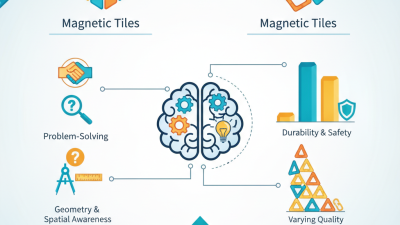
The bars count the comparison criteria in this buyer checklist—not manufacturer ratings or market statistics. Product range covers shapes, set sizes, colors, accessories, and age grades. Compliance checks include ASTM F963, EN 71, CPSIA, and REACH; applicable requirements vary by market. Production capability covers OEM/ODM, material options, quality control, capacity, and lead-time planning.

How Global Buyers Can Choose and Source a Suitable Manufacturer

Choosing among China’s top 10 magnetic tile manufacturers requires more than comparing prices. Global buyers should review factory experience, production capacity, and quality records. Ask for a recent product sample, not only catalog photos. Check whether magnets are fully sealed inside durable plastic. Inspect tile edges, connector strength, color consistency, and packaging quality. Small differences become serious problems after thousands of units.

A reliable sourcing process includes clear specifications and independent testing. State the required tile size, magnetic strength, materials, age grading, carton dimensions, and target order quantity. Request test reports for the destination market, such as applicable toy safety, chemical, and mechanical standards. Verify the report matches the exact product and current production batch. A factory visit or live video audit can reveal storage conditions, worker checks, and assembly procedures. Paperwork can look perfect. Production may still vary.

Tips: Order samples from several shortlisted factories and compare them in the same room. Use a simple checklist for magnet exposure, drop resistance, odor, and surface scratches. Confirm mold ownership, replacement policies, lead times, inspection points, and shipping terms in writing. Start with a controlled trial order before scaling. My experience is that the cheapest quote often hides packaging changes or weaker quality checks. Buyers should also leave room for mistakes, because specifications may need revision after real handling tests.